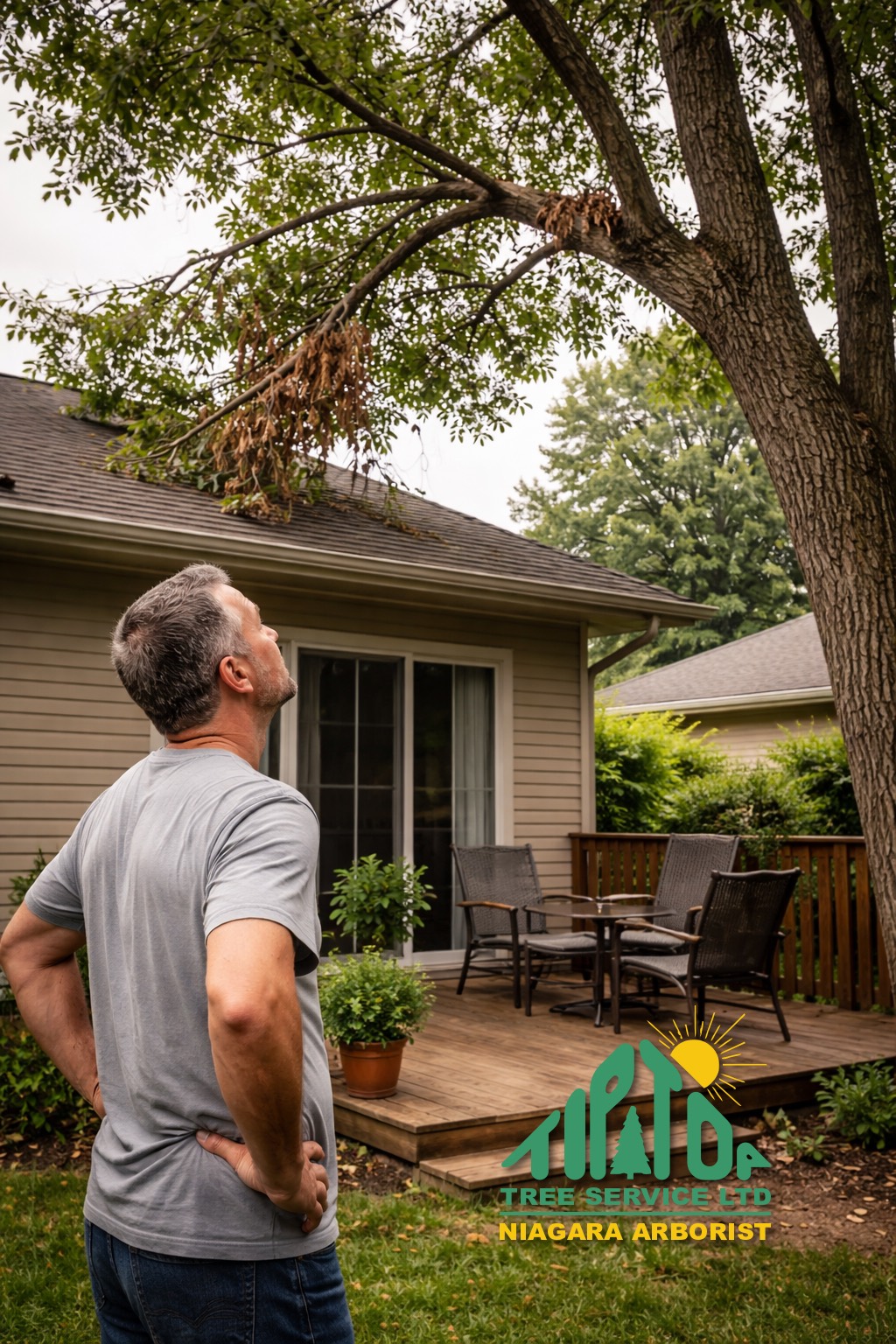
 Some trees look harmless right up until the moment they cause serious damage. A heavy limb can come down without much warning. A weakened trunk can start to fail after wind, rain, or simple age. And in many cases, homeowners do not realize there is a problem until the tree is hanging over a roof, leaning toward a garage, or dropping large branches into the yard.
At Tip Top Tree Service Ltd., we have seen firsthand how quickly a tree can go from looking manageable to becoming a real safety concern. If you are unsure whether a tree on your property is still safe, there are a few warning signs you should never ignore.
Dead or Hanging Branches
One of the most obvious warning signs is a dead branch high in the canopy or hanging over an area where people walk, sit, park, or play. These branches can fall with little notice, especially during high winds or after a storm. Even a branch that looks stable from the ground may already be brittle, hollow, or partially detached.
If a branch is over your driveway, your deck, your pool, or your neighbour’s property, the risk goes beyond appearance. It becomes a safety issue.
A Tree That Is Leaning More Than It Used To
Not every leaning tree is dangerous, but a tree that has recently shifted or appears to be leaning more than before deserves attention. This is especially true if the lean is new, the soil around the base looks raised or cracked, or the tree is now pushing toward a home, garage, fence, or power lines.
Trees can become unstable over time, and storms often reveal weaknesses that were already there. A tree that looked fine last season can become a hazard much faster than most homeowners expect.
Cracks in the Trunk or Major Limbs
Visible cracks are one of the clearest signs that a tree may be under stress. Deep splits in the trunk or large limbs can mean the tree is struggling structurally. In some cases, the damage may be limited. In others, it can be a sign that failure is becoming more likely.
The danger with cracking is that people often underestimate it. A tree can still have leaves, still look alive, and still be unsafe.
Signs of Rot, Decay, or Hollow Areas
Decay is not always easy to spot from a distance. Mushrooms growing near the base, soft wood, hollow sections, missing bark, or areas that look sunken or unusually dark can all suggest internal deterioration. When decay affects the structural strength of the trunk or major limbs, the tree may no longer be reliable in strong weather.
This is where professional assessment matters. A tree can appear stable from the outside while hiding serious weakness within.
Storm Damage That Should Not Be Ignored
After a major windstorm, homeowners often notice the obvious damage first. A branch on the lawn. A torn limb. Leaves everywhere. But some of the most dangerous storm damage is less visible. A partially split branch, a compromised trunk, or a tree that has shifted under stress can become much more dangerous in the days that follow.
If your tree was hit hard during a storm, it is worth having it looked at before the next round of wind makes the decision for you.
A Tree Growing Too Close to Important Structures
A healthy tree can still become a problem when it is positioned too close to a house, garage, shed, fence, driveway, or utility area. Overhanging limbs, heavy canopy growth, and limited clearance all increase the consequences if something fails.
In these cases, the question is not just whether the tree is healthy. The question is whether its size, shape, and location are creating a level of risk you are comfortable living with.
Insect Damage or Decline in the Canopy
When a tree begins to thin out at the top, drop branches more often, or show signs of overall decline, it may be struggling with disease, pest damage, or internal stress. Homeowners sometimes wait too long because the tree is still partially green. Unfortunately, partial life does not always mean structural safety.
The longer a weakened tree is left in place, the more unpredictable it can become.
Why Homeowners Wait Too Long
Most people do not ignore tree problems on purpose. They wait because they are busy. They are unsure whether the problem is serious. They hope the tree will make it through one more season. Or they simply do not want to remove a tree unless it is absolutely necessary.
That is understandable. Trees add beauty, privacy, and shade to a property. But when a tree starts showing warning signs, waiting can turn a manageable job into an emergency.
When It Is Time to Call a Professional
If you are noticing dead limbs, leaning, cracking, visible decay, storm damage, or a tree threatening nearby structures, it is time to bring in an experienced tree service company. The goal is not always removal. Sometimes the right solution is pruning, risk reduction, or a professional assessment of the safest next step.
What matters most is making the decision before the problem becomes urgent.
Trusted Tree Service in Niagara Since 1988
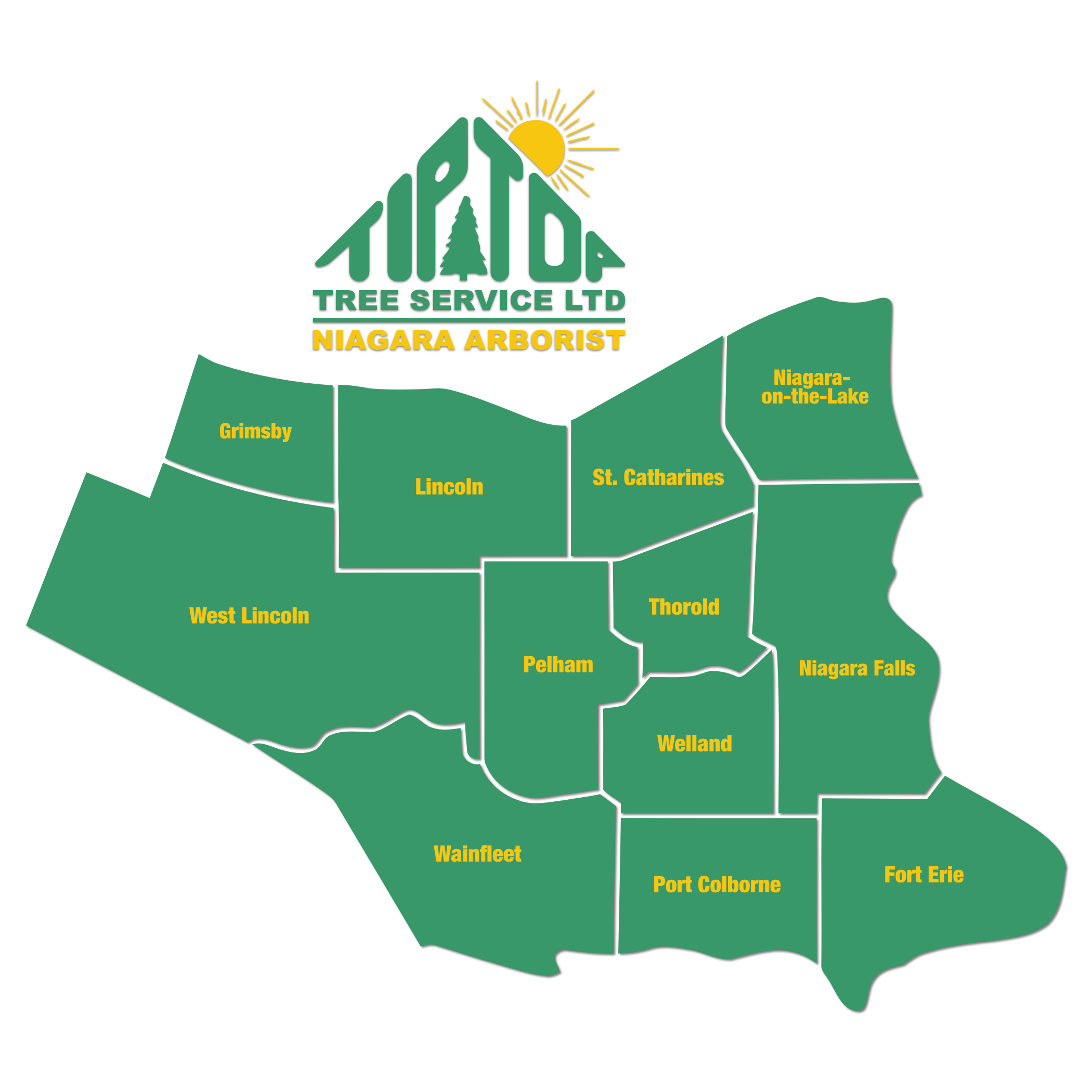
Tip Top Tree Service Ltd. provides professional tree services for residential and commercial properties across the Niagara Region. From dangerous limb removal to high-risk tree work and year-round service, we help property owners deal with tree concerns safely and responsibly.
If you have a tree that does not look quite right, do not wait for it to make the decision for you.
Request a free estimate today and let Tip Top Tree Service Ltd. take a look.